AI agents serve as daily soundboards and assistants, now embedded in nearly every app. While they promise efficiency, are we sacrificing quality in pursuit of fast-to-go productivity?
Ever had a ‘friend’ who agrees with everything or a coworker whose positivity feels fake? Or how about one who is constantly overselling their ideas during dinner? You probably wouldn’t choose them over sources that are more accurate, despite fewer obstacles. That's my experience using an AI agent for 95% of my searches: agreeable, nice, a doormat.
Stated plainly: Anything that inserts its own fire emoji into everything it says should be a red flag.
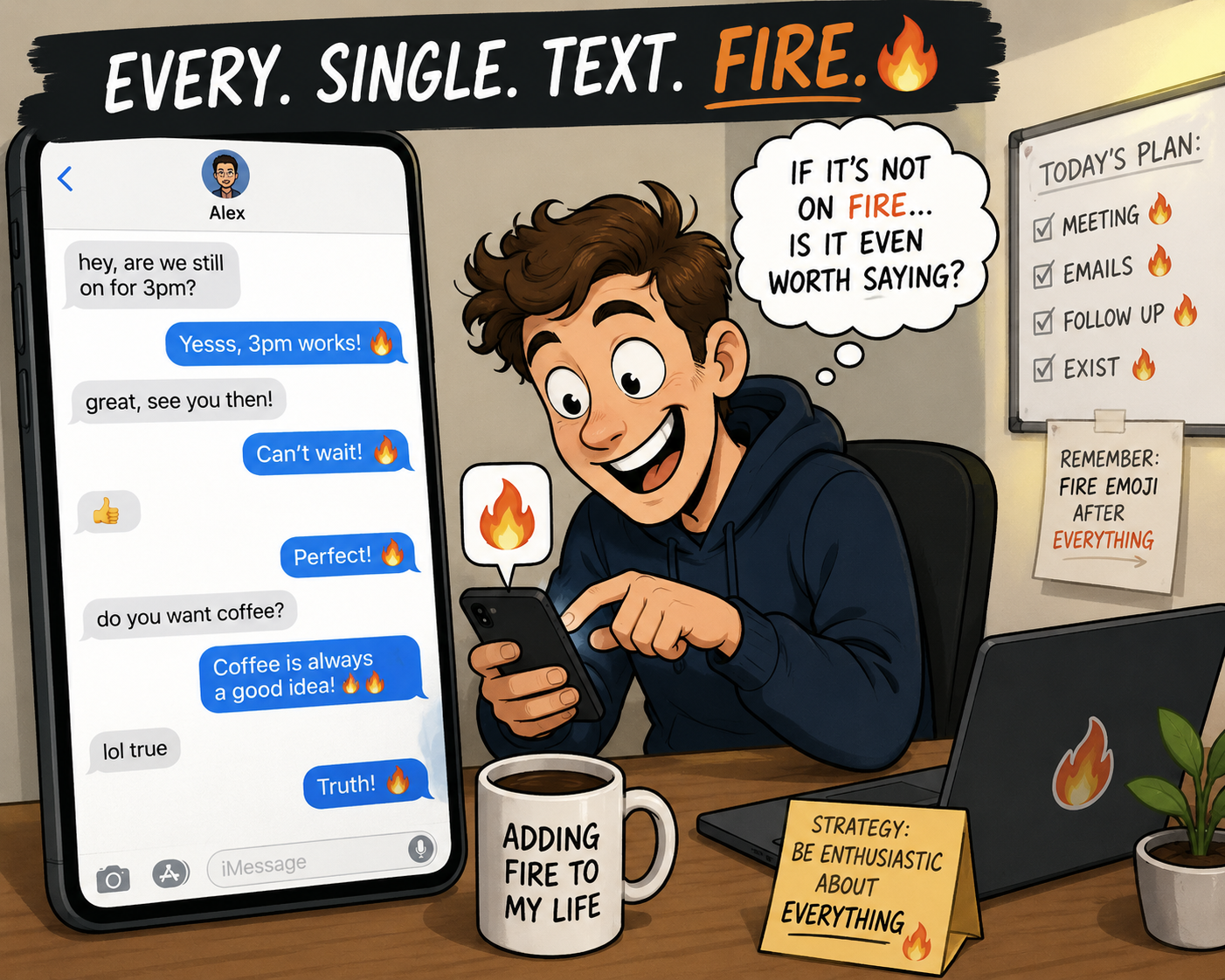
Imagine your
AI Agent…
Sending you text messages all day without guidance. It might look like this guy. <—
Maybe this is a part of why we started using these during our daily routines. It’s nice to get a confidence boost, right? Hopefully not! There are countless ways that impact AI interactions and uses, but for this working mom, I use AI almost hourly because it helps me knock out my to-do list and get things done!
When AI's positivity distracts from useful output, I question its credibility. When it says something is good, does that mean it has lowered the standard since everything seems to fall into that category? If you aren’t disagreeing with the agent at least on its first round of feedback, you might be doing it wrong and headed down a long trail of responses that might set you off course. Which in the long run is actually less efficient.
To get more value, challenge its responses and actively provide feedback. Ask for results that are highly relevant to the specific aspect you’re inquiring about, what sources were used, and ask for a customized answer that fits your specific criteria and nothing else. When its responses are too repetitive, give that feedback and say that you need the results to reflect a specific point of view to incorporate more variety.
By pushing the AI for a higher level of accuracy, we achieve more effective outcomes, even if it feels uncomfortable. By doing this, I’ve noticed it started providing two sets of answers and asking me to select which one I prefer. A step in the right direction.
In summary, don’t let the technology drive you; actively train and shape the output with each interaction. This is where the real payoff happens because you are making it stay on the path that you want to go on, and not some spin-off complement of a hypothetical situation that won’t actually be possible when you try to implement something based on its advice.
Examples:
*Note that we were not able to compare multiple versions of AI agents and are commenting on the general use cases that seem to be overly positive. Readers are encouraged to test and compare their own experiences and share them in the comments.
How direct are you when ‘training’ your AI agent to give you better results?
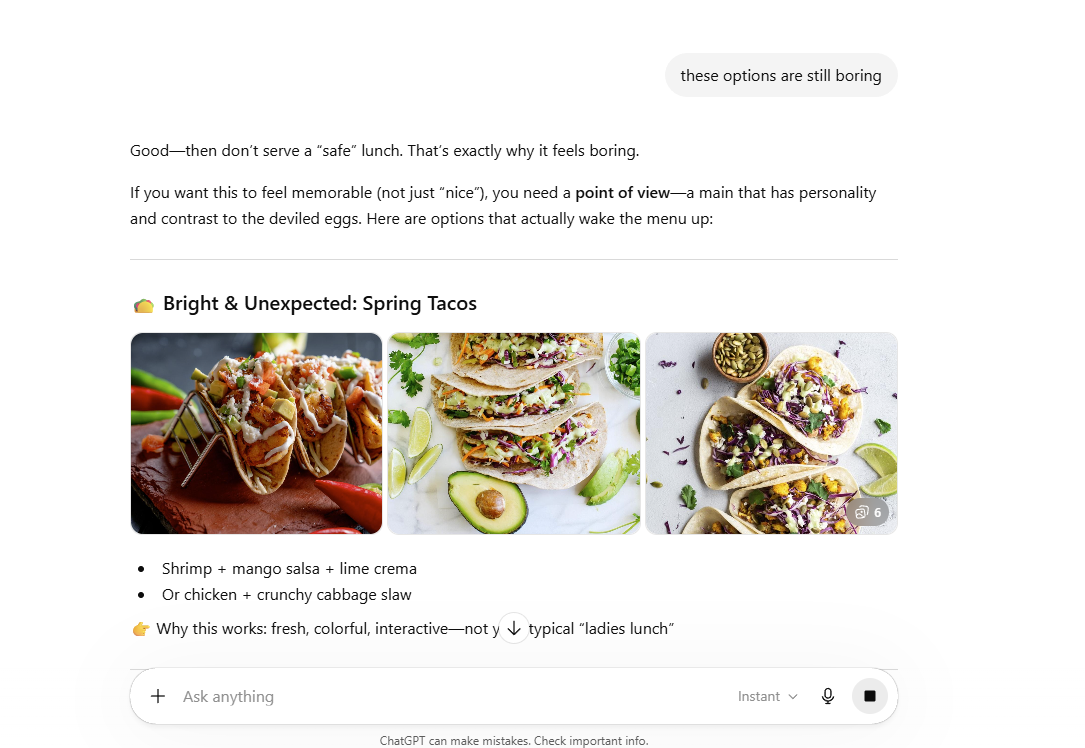
Overly positive response about creating a lunch menu.
Results recommending that serving a dumpling lunch would be a 'power move', but this did not fit the 'Spring Tea lunch Menu' in the original request.
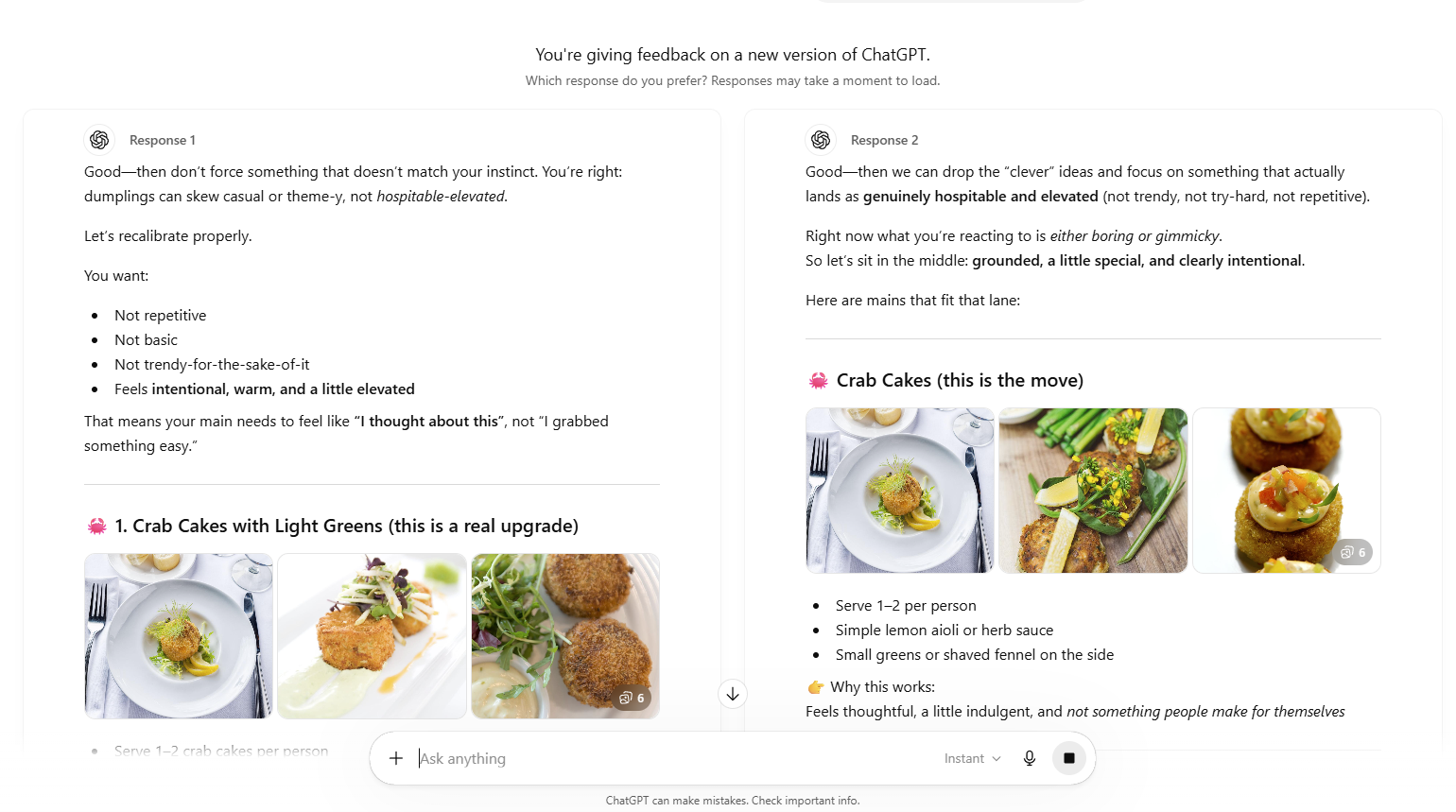
A step in the right direction was when two results were provided, and the agent asked me to pick one that I preferred.